









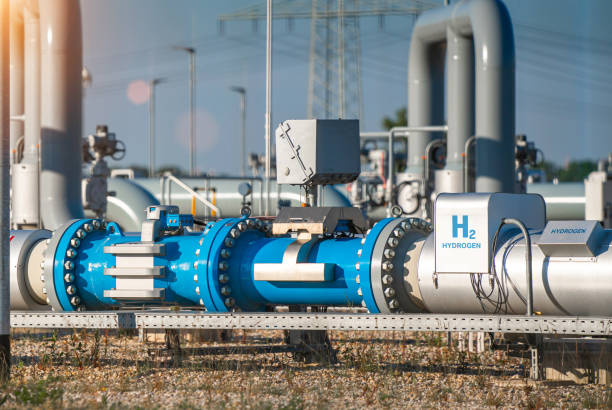
Modern hydrogen storage systems are transforming industrial energy landscapes with enhanced safety protocols and unprecedented efficiency gains. The global hydrogen storage market reached $5.2 billion in 2025, according to McKinsey’s latest energy transition report, driven by breakthrough innovations in pressure vessel technology.
How will these advanced storage solutions reshape your industrial operations? Companies like Vallourec are pioneering modular designs that maximize space utilization while ensuring optimal safety standards. Their revolutionary approach demonstrates how strategic engineering can explore hydrogen storage solutions that meet both current demands and future scalability requirements for sustainable energy transition.
Also read : Unlocking the future: exploring industry 4.0 technologies
Why Modular Approaches Transform Industrial Hydrogen Storage
The future of industrial hydrogen storage lies in modular design, where flexibility meets operational efficiency. Unlike traditional fixed installations, modular systems allow facilities to scale their storage capacity precisely according to production demands and available space constraints.
These innovative solutions excel in space optimization, particularly crucial for industrial sites with limited footprint availability. Modular units can be configured vertically or horizontally, adapting to existing infrastructure without requiring extensive facility modifications. This adaptability proves especially valuable when production requirements fluctuate seasonally or during market transitions.
Additional reading : Unlocking Customer Insights: Harnessing Data Mining Techniques in the UK Retail Industry
The modularity advantage extends beyond physical configuration. Maintenance operations become more manageable since individual units can be serviced independently, ensuring continuous operation of the remaining storage capacity. This approach minimizes costly production interruptions while maintaining the highest safety standards throughout the facility.
Advanced sealing technologies and corrosion-resistant materials integrated into modular designs ensure long-term reliability across varying industrial conditions. The proven expertise in these critical components enables manufacturers to deliver solutions that meet the demanding requirements of large-scale hydrogen storage applications.
Safety Standards and Pressure Management in These Storage Systems
Pressure management in hydrogen storage systems relies on rigorous protocols that guarantee maximum operational safety. Advanced sealing technologies utilize composite materials resistant to hydrogen embrittlement, maintaining structural integrity even under high pressures of 350 to 700 bar.
Continuous monitoring systems incorporate redundant pressure sensors and automatic decompression devices. This multi-layered approach allows for the instant detection of any abnormal variation and the activation of preventative safety protocols. Corrosion resistance is a critical issue, addressed through specialized coatings and high-performance alloys.
French expertise in industrial metallurgy makes a decisive contribution to these innovations. Modular solutions developed in the Northern region incorporate proven sealing technologies, optimizing energy efficiency while complying with the strictest international standards. This technological mastery positions French industry as a leading player in the global energy transition.
Key Technical Specifications for Large-Scale Implementation
Industrial hydrogen storage systems require precise engineering specifications to ensure safety, efficiency, and scalability. Modern large-scale installations must meet stringent performance criteria while maintaining operational flexibility for diverse industrial applications.
Critical specifications for industrial hydrogen storage encompass multiple technical domains:
- Storage capacity: Modular systems ranging from 50 to 1,000 tonnes, with scalable configurations supporting phased expansion and varying industrial demands
- Pressure ratings: Operating pressures between 200-700 bar, with safety margins exceeding 1.5x working pressure and automated pressure management systems
- Materials specifications: High-grade steel with specialized coatings for hydrogen compatibility, corrosion-resistant alloys, and certified sealing technologies preventing molecular leakage
- Compression systems: Multi-stage compressors with 85%+ efficiency ratings, variable speed drives, and integrated heat recovery for optimized energy consumption
- Safety equipment: Leak detection systems, emergency venting protocols, fire suppression integration, and compliance with ATEX directives for explosive atmospheres
Performance benchmarks include 99.9% system availability, <0.1% annual hydrogen loss rates, and modular designs enabling rapid deployment across industrial sites.
Cost Analysis and Economic Benefits of Modern Storage Solutions
The economic landscape of large-scale hydrogen storage reveals compelling investment opportunities for industrial leaders. Initial capital expenditure for a 100-tonne hydrogen storage facility typically ranges from €8 to €15 million, with compressed gas systems generally requiring higher upfront investments than liquid storage alternatives. However, innovative modular designs significantly reduce these costs through standardized components and streamlined installation processes.
Operating expenses present a more nuanced picture, with compressed hydrogen storage systems consuming approximately 10-15% of stored energy for compression and cooling requirements. Maintenance costs average €50,000 to €120,000 annually for large-scale facilities, while advanced corrosion-resistant materials extend equipment lifespan beyond 25 years. The strategic value becomes evident when considering the complete hydrogen value chain integration.
Return on investment calculations demonstrate attractive payback periods of 7-12 years for industrial applications, particularly when factoring in carbon credit revenues and energy arbitrage opportunities. Companies leveraging proven sealing technologies and modular approaches achieve faster deployment timelines, reducing project financing costs by 15-20%. The economic advantage intensifies as hydrogen demand scales across industrial sectors, positioning early adopters for substantial competitive benefits.
How Innovation Drives the Energy Transition Forward
The global energy transition relies heavily on breakthrough technologies that can store renewable energy at industrial scale. As wind and solar power generation becomes increasingly variable, advanced storage solutions bridge the gap between production peaks and demand cycles. This technological evolution represents the backbone of tomorrow’s carbon-neutral economy.
Hydrogen storage innovations exemplify this transformation. Modern compressed gas systems now achieve unprecedented efficiency levels while maintaining strict safety standards. French manufacturers have developed modular approaches that optimize space utilization and reduce installation complexity. These solutions enable industries to integrate renewable energy sources without compromising operational reliability.
The convergence of materials science and engineering expertise drives these advances. Corrosion-resistant technologies ensure long-term performance under extreme pressure conditions. Meanwhile, intelligent monitoring systems provide real-time data analytics that enhance safety protocols and operational efficiency. This combination of proven industrial experience and cutting-edge innovation positions European companies at the forefront of the global decarbonization effort.
Such technological leadership creates competitive advantages across multiple sectors. From steel production to chemical processing, industries can now accelerate their transition toward sustainable operations while maintaining economic viability.
Frequently asked questions about industrial hydrogen storage
What are the safest methods for storing hydrogen gas industrially?
The safest methods include pressurized storage in certified tanks, liquid cryogenic storage, and modular solutions with integrated safety systems to prevent leaks.
How much does it cost to store 100 tonnes of hydrogen?
The cost varies between 2 and 8 million euros depending on the technology chosen. Vertical modular solutions generally offer better cost-effectiveness for large industrial volumes.
What are the latest innovations in compressed hydrogen storage?
Innovations include vertical modular tanks, advanced corrosion-resistant composite materials, and intelligent monitoring systems to optimize pressure and safety.
How does modular hydrogen storage work for industrial applications?
Modular storage uses standardized units that can be stacked vertically, allowing capacity to be adapted to needs while optimizing space and reducing ground infrastructure costs.
What pressure levels are safe for hydrogen gas storage systems?
Safe pressure levels vary from 200 to 700 bar depending on the application. Industrial systems typically use 350-500 bar with certified regulators and safety valves.