

Factories no longer sleep. They think, adapt, predict—and sometimes even decide on their own. What once required human supervision, endless spreadsheets, and reactive problem-solving is now handled in real time by intelligent systems that never blink. This is not a distant future; it’s happening right now. Industry 4.0 isn’t just upgrading machines—it’s redefining how value is created, how risks are managed, and how companies stay alive in hyper-competitive markets. The real question is no longer if you should adapt, but how fast you can.
The Digital Revolution: Exploring the Latest Industry 4.0 Technological Innovations
Industry 4.0 is transforming manufacturing with unprecedented efficiency gains and cost reductions. According to McKinsey's 2024 research, companies implementing smart factory technologies report productivity increases of up to 25% within the first two years. These innovations in smart manufacturing combine IoT sensors, artificial intelligence, and automated systems to create truly intelligent production environments. But what does this digital revolution mean for your business's competitive advantage?
Core Technologies Driving the Fourth Industrial Revolution
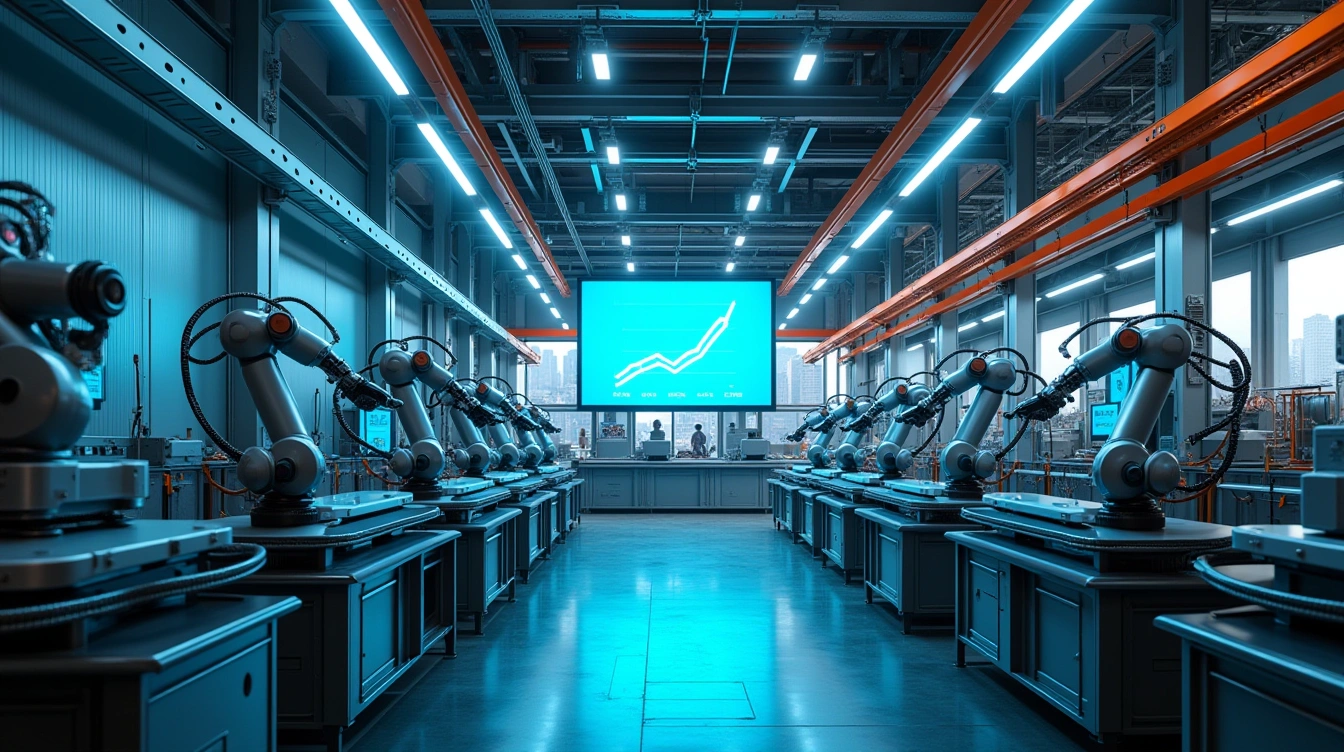
The Fourth Industrial Revolution transforms manufacturing through an interconnected ecosystem of advanced technologies. These innovations work together to create smart factories where machines communicate, analyze data, and make autonomous decisions in real-time.
Six core technologies form the backbone of this industrial transformation:
- Internet of Things (IoT) connects machines, sensors, and systems to collect and share operational data across the entire production chain
- Artificial Intelligence processes vast amounts of data to optimize processes, predict maintenance needs, and enhance quality control
- Collaborative robotics enables safe human-machine interaction, combining human creativity with robotic precision and endurance
- 3D printing revolutionizes prototyping and small-batch production, reducing lead times and enabling mass customization
- Augmented reality enhances worker training, equipment maintenance, and complex assembly processes through digital overlays
- Blockchain technology ensures supply chain transparency, product traceability, and secure data exchange between partners
These technologies don't operate in isolation. They form an integrated network where IoT sensors feed data to AI systems, which then guide robotic operations while blockchain maintains security and traceability throughout the process.
How AI and IoT Transform Modern Manufacturing Environments
The convergence of artificial intelligence and Internet of Things technology creates a powerful synergy that fundamentally reshapes manufacturing operations. When AI algorithms analyze data streams from IoT sensors, manufacturers gain unprecedented visibility into their production processes, enabling real-time optimization that was previously impossible.
Predictive maintenance exemplifies this transformation perfectly. IoT sensors continuously monitor equipment vibrations, temperature fluctuations, and performance metrics, while AI systems analyze these patterns to predict failures weeks before they occur. This approach reduces unplanned downtime by up to 50% and extends equipment lifespan significantly.
The data collection capabilities extend far beyond maintenance. Smart sensors track product quality, energy consumption, and workflow efficiency throughout the manufacturing cycle. AI processes this information to identify bottlenecks, optimize resource allocation, and suggest process improvements that human operators might overlook.
This intelligent ecosystem enables manufacturers to achieve new levels of operational excellence. Production schedules adapt dynamically to demand changes, quality control becomes more precise, and energy usage optimizes automatically. The result is a manufacturing environment that learns, adapts, and continuously improves its performance.
Implementation Strategies for Businesses of All Sizes
The path to digital transformation varies dramatically depending on your company's size and resources. Small manufacturers often benefit from starting with targeted solutions that address specific pain points, while larger enterprises can afford comprehensive system overhauls.
For small and medium businesses, a phased approach proves most effective. Begin with data collection systems like IoT sensors to monitor equipment performance. This foundation provides immediate insights while building the infrastructure for more advanced technologies. Cloud-based solutions offer scalability without massive upfront investments, making sophisticated analytics accessible to businesses of all sizes.
Large enterprises face different challenges, primarily around integration complexity and change management. These organizations typically require strategic partnerships with technology providers who understand legacy system constraints. The key lies in creating pilot programs that demonstrate value before company-wide rollouts.
Regardless of size, successful implementation demands clear ROI metrics and employee buy-in. Technology investments should align with specific business objectives rather than following industry trends blindly.
Measuring Success: ROI and Performance Indicators
The true value of digital transformation emerges through measurable outcomes that directly impact your bottom line. Manufacturing companies implementing Industry 4.0 technologies report an average productivity increase of 12-15% within the first two years, according to recent McKinsey research. However, success metrics extend far beyond simple productivity gains.
Financial indicators form the foundation of ROI evaluation. Cost reduction through predictive maintenance, energy optimization, and waste elimination provides immediate tangible benefits. Revenue growth from improved product quality, faster time-to-market, and enhanced customer satisfaction represents the longer-term value creation that sustains competitive advantage.
Operational KPIs reveal the efficiency gains driving financial performance. Overall Equipment Effectiveness (OEE) improvements, reduced downtime percentages, and cycle time reductions demonstrate how technology investments translate into operational excellence. These metrics provide the granular data needed to optimize processes continuously and justify further investments.
Modern analytics platforms integrate multiple data sources to provide comprehensive performance dashboards. Manufacturing execution systems, IoT sensor networks, and enterprise resource planning tools combine to create real-time visibility into transformation progress. This integrated approach ensures that decision-makers have the insights needed to refine strategies and maximize return on digital investments.
Future Outlook: What's Next for Smart Manufacturing
The next wave of manufacturing innovation is already taking shape. While Industry 4.0 continues its global rollout, Industry 5.0 emerges as the natural evolution, promising a more human-centric approach to smart production. This shift prioritizes collaboration between workers and intelligent systems, moving beyond pure automation toward augmented human capabilities.
Sustainability will drive the most significant changes in manufacturing through 2030. Carbon-neutral production goals are pushing companies toward circular manufacturing models where waste becomes input for other processes. Digital twins will evolve to include environmental impact modeling, helping manufacturers optimize both efficiency and ecological footprint in real-time.
Edge computing and 5G networks will enable truly autonomous factories by 2027. These technologies will support instant decision-making at the production level, reducing dependency on cloud connectivity. Meanwhile, quantum computing applications will revolutionize supply chain optimization and predictive maintenance, solving complex manufacturing challenges that current systems cannot handle.
The integration of generative AI into design and production processes represents another frontier. This technology will enable rapid prototyping and customization at scale, fundamentally changing how products move from concept to market.
Your Questions About Industrial Digital Transformation
What are the main technologies driving Industry 4.0 transformation?
The core technologies include IoT sensors, artificial intelligence, cloud computing, robotics, and digital twins. These interconnected systems enable real-time data collection, predictive analytics, and automated decision-making across manufacturing environments.
How can small businesses implement Industry 4.0 solutions cost-effectively?
Start with pilot projects focusing on specific pain points. Cloud-based solutions, IoT starter kits, and phased implementation reduce upfront costs while demonstrating ROI before scaling operations.
What's the difference between Industry 3.0 and Industry 4.0 technologies?
Industry 3.0 introduced automation and computers. Industry 4.0 adds intelligent connectivity - machines communicate autonomously, analyze data in real-time, and make decisions without human intervention, creating truly smart factories.
Which Industry 4.0 technologies offer the best ROI for manufacturers?
Predictive maintenance and quality control systems typically deliver fastest returns. They reduce downtime by 30-50% and minimize defects, providing measurable cost savings within the first year of implementation.
How do IoT and AI work together in smart manufacturing environments?
IoT devices collect vast amounts of operational data, while AI algorithms analyze patterns to optimize processes, predict equipment failures, and automate quality control in real-time manufacturing decisions.